Behind Chick-fil-A’s Success

cow-8.png

Political controversy aside, Chick-fil-A’s success is undeniable. In 2015, they averaged $3.2 million in per-store sales, which is 25% higher than McDonald’s, and double Burger King or Wendy’s. In 2014 they overtook KFC as America’s biggest Chicken chain. Analysts now predict that they are on track to become the 4th largest chain in America in terms of revenue by 2020, calling them the largest and least appreciated threat to McDonald’s. And if you think that this is largely irrelevant in New York, where Bill De Blasio has come out officially against the company for the CEO’s homophobic remarks, you might want to think again. 8 blocks from their first NYC location in midtown they are currently construction a second, and there are additional plans in the works to open a dozen more around the outer boroughs – bringing them close to the number of Panera breads in the city.

Needless to say, controversy does not seem to be slowing them down too much. Analysts credit their tight operations, and perhaps a certain amount of exclusivity: apparently only 0.7% of the 20,000 applicants who applied for franchises last year were given a spot – an acceptance rate lower than Harvard.

To read more, click here.

Chobani CEO Offers Full Time Employees an Unprecedented Bonus

On Tuesday Morning, 2,000 full time Chobani employees received the surprise of a lifetime: shares worth 10% of the company, a bonus which could mean up to a million dollars for some employees when the company is sold or goes public. According to CEO Hamdi Ulukaya, the Turkish immigrant who founded Chobani in 2005, the goal is to pass along the wealth he could not have accumulated without the help of his employees.

The distribution of shares was based on tenure, with the employees who had been with Chobani longest receiving the largest distribution. Since Chobani’s current valuation, as estimated by TPG capital, is $3 – $5 billion, the average value of each employee’s distribution is $150,000. The shares come directly from Mr. Ulukaya, who is still the majority stakeholder. If employees leave or retire before Chobani is bought or goes public, they can hold onto the shares or sell them back to the company.

The move has obviously already generated a lot of press, particularly as it touches on the hot button topic of the wealth gap in America, much discussed this election cycle. Mr. Ulukaya himself has not made the connection explicit – focusing instead on his appreciation for his employees, and their crucial role in bringing the company where it is today.

To read more, click here.

Highlights from the North American Restaurant and Foodservice 2016 Outlook

There’s good news to be had in the 2016 restaurant data so far, but there’s also a lot of data to sift through. You can read the full report here, or see some key take-aways below:

  • Employment levels and disposable income are high, riding positive tailwinds from the end of last year. The number of restaurants per-capita has also decreased steadily from a peak in 2013, meaning there is less supply to meet the growing demand.
  • A decline in oil prices is good news for restaurants’ bottom lines, but has affected the industry unevenly, creating more competition for major chains from smaller players.
  • Guest priorities include lower prices, improved healthy menu options, and a focus on food safety.
  • Quick-service-restaurants are focusing more on discounting, but guests are still most likely to use coupons and deals from restaurants they already visit frequently.
  • Most consumers support wage increases throughout the service industry, and would be willing to pay a premium toward such increases.
  • Tipping is still a controversial topic, with 65% of survey respondents saying they do not support replacing gratuity with a service charge.
  • Online and mobile ordering is the most important technological priority to restaurant guests.

Jobless Claims at Their Lowest in 42 Years

In a bright sign for all industries, jobless claims in the U.S. declined unexpectedly last week to hit 253,000, the lowest since November of 1973. Jobless claims are a measure of the number of Americans filing for unemployment, and their decrease indicates employers that are upbeat about the economy, increasing hiring and expanding employee headcount.

The number of continuing claims from those already receiving unemployment benefits also fell, and for 58 consecutive weeks claims have been below the 300,000 level that economists say is typically consistent with an improving job market. Data from the labor department also indicates more employees voluntarily leaving their jobs, indicating confidence that they will be able to find another.

Besides the economic growth that brings revenue to small businesses, a decrease in claims also means lower rates of unemployment insurance – good news all around for the hospitality industry.

To read more, click here.

New York Approves $15 Minimum Wage

New York Governor Andrew Cuomo followed closely on the heels of California yesterday, announcing an agreement with Albany lawmakers to raise the NY State minimum wage to $15 per hour over the next few years. The increase will begin with for workers in New York City employed by large businesses (those with at least 11 employees), who will have a minimum wage of $11 at the end of 2016, and an additional $2 each year after, reaching $15 on 12/31/2018.

The national labor rights movement has been fighting for $15 since 2012, and roughly half of the 50 states have increased their minimums somewhat (although the Federal minimum is still set at $7.25 due to congressional opposition). The final legislation in NY has not been approved, so it’s unclear how it will affect tipped workers. The tipped minimum in New York increased recently to $7.50, precipitating some of the gratuity-free movement. Additional increases would almost certainly prompt more NYC restaurants to raise prices and eliminate tipping altogether.

To read more, click here.

Free Burritos Can’t Help Chipotle Recover before 2018, But Maybe Burgers Can?

burrito burger 009.JPG

Chipotle’s next move?

After their colossal – and well publicized – downfall, Chipotle has been doing everything possible to get back in customer’s good graces. That includes giving away about 9 million free burritos earlier this month, according to the chain (that’s $62 million worth, if anyone’s counting). They plan to send another 21 million free food coupons in the mail this month. But analysts from Wedbush Securities point out that, while sales may be returning slowly, the coupon strategy isn’t a sustainable one. Eventually, guests have to forget the reason they stopped coming in the first place.

The investment firm downgraded Chipotle’s shares and cut their target stock price from $450 to $400, saying that “current valuation reflects an overly optimistic outlook regarding Chipotle’s path to recovery.” They do not expect Chipotle to recover the sales lost from the salmonella, norovirus and E. Coli outbreaks until at least 2018.

One curveball to these predictions may be the news that Chipotle has applied for a trademark on the name “Better Burger,” indicating they have plans to recoup the losses in another way. It’s a strange move considering the number of existing burger chains, and there’s no word yet from Chipotle on how they plan to market themselves in this arena.

To read more, click here and here.

The Vanilla Shortage on the Horizon

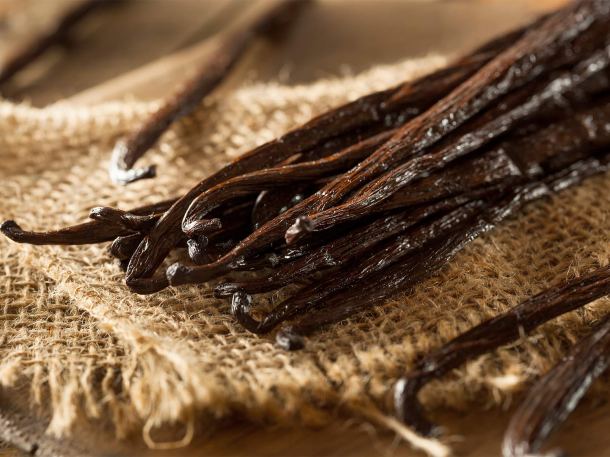
vanilla-shutterstock_281680811.jpgVanilla often gets a bad rap as the most boring flavor, but ice cream connoisseurs know that it’s still an irreplaceable necessity in the vast majority of varieties. This makes the news even more troubling that a vanilla shortage is driving supply down and prices up just in time for the warm weather.

The shortage has been caused by a particularly bad harvest months ago in Madagascar, the world’s largest producer of the beans. Since harvesting and curing vanilla pods is a process that takes several months, this shortage has been on the horizon for awhile, and prices have been climbing steadily. They’re now at near-record highs of $205 per kilogram, up from $85 last year and $20 in 2011. Apparently the process has become circular, with farmers picking beans earlier and lowering the overall quality of the supply.

These price fluctuations in crops are not new, and so far the 2016 crop looks to be doing better (so it’s unlikely we’ll have to hunker down for several vanilla-free years). The larger long term problems may be in coffee and cocoa, which are so far affected more negatively by climate change. The vanilla shortage of 2015 will hopefully just serve as an important reminder that ice cream’s most-maligned flavor is also one of the most important.

In France, the Magic Word Could Get You a Cheaper Coffee

While we all know that “please” is helpful for getting mom to pass the spaghetti at family dinner, the magic word (or it’s French equivalent) now has an added power – it can lower the price of your coffee. French cafes are increasingly turning on to the trend of charging their rude guests more. In many cafes, this practice is kept discrete, although at least two spots have become open about the tiered pricing. At L’Hamburgé in Grenoble, France, coffees range from €1.50 for the most demanding guests, down to €1 for those who ask nicely. At La Petite Syrah in Nice, the divide is even more extreme: a full “Hello, coffee please” costs only €1.40, but saying only “Coffee” is a full €7. There is a middle tier of €4.25 for adding a s’il vous plaît but no bonjour. It’s also unclear if tourists who are still struggling to be polite in a new language get any special dispensation – or added penalty.

While it would be nice if we could all be a little kinder to each other before the morning coffee, we don’t think a trend like this would (or should) catch on here. Hospitality and human connection are the x-factor you just can’t put a price on. Even if a guest forgets the magic word, chances are they won’t forget your great service; next time, just hope they come in with mom to remind them.

To read more, click here.

Brazilian Chain Fogo de Chão Finds U.S. Success in 2015

fogo-de-chaojpg-152fc25e6d984682.jpg

Meat cooking at Fogo de Chao

The Brazilian steakhouse Fogo de Chão, known for it’s all you can eat buffet of meat, carved table side for guests, had a very good year in the U.S. Same-store sales rose 3.5% in the fourth quarter, and 6 more U.S. locations were opened (plus one unit in Mexico), leading to a 12.8% increase in revenue from the previous year. Net income increased even more, up 58.7% to $27.9 million, or $1.06 per share.

CEO Larry Johnson attributed their success to “initiatives we implemented to drive trial and frequency while at the same time growing our average check.” He specifically mentions the group dining platform, which markets the restaurant to large corporate gatherings, wedding parties and other celebrations. Johnson also calls out their expansion to other dayparts, including lunch and brunch.

The Brazilian branch of the chain did not meet the same success last year, due to the continuing Brazilian recession. Same store sales in Brazil fell 8.8% after a successful 2014, in which the world cup brought new guests from around the globe.

To read more, click here.

Grubhub Hopes a Greater Delivery Focus Will Keep Copycats at Bay

443145850_1280-e1393607221897.jpgThe food delivery market is a crowded one, with new competitors emerging every day. Grubhub, which owns Seamless, may control a large portion of that market, but all that competition took a toll last year. In 2015, the company’s growth slowed significantly and their stock value followed suit. In response, Grubhub declared that they would move from handling logistics only to actually delivering the food.

Currently, Grubhub handles the physical delivery of about 8% of their orders. The other 92% are delivered by the restaurants themselves, which use the Grubhub equipment and software to take the orders. Taking over delivery gives the company greater control, and may make them more appealing to the restaurants themselves – but the strategy is not without its pitfalls. Hiring contracted companies to handle the food can be very expensive, and consumers are reticent to pay much for the convenience. In the fourth quarter of 2015, Grubhub lost $5.5 Million on delivery.

CFO Adam DeWitt claims that that loss was still a significant improvement over the third Quarter, so the momentum may be in Grubhub’s favor. That’s good news, since Uber and Amazon are no insignificant threat. Whatever their strategy this year, Grubhub’s biggest advantage may be simply that they got there first.

To read more, click here.