 Their Success…Trends usually only last a limited time, until a new trend surfaces. While juiceries were once a major trend around the world, slowly a decrease in performance sales are hitting the market, with numerous juicing locations closing. The Little Beet, however, bets that healthy organic eating will be a long-lasting trend for New Yorkers. The organic market is still growing, and organic eating has become more of a lifestyle then just a trend for New Yorkers. The Little Beet recognizes this new lifestyle choice that New Yorkers are developing and successfully aligns its concept to it. From their menu to their interior design, the brand embodies their organic ideals “Fast, Farm, Fresh.”
All of the ingredients on their menu are sourced from farmers and local purveyors. The Little Beet’s menu items are all 100% gluten-free, and promotes that customers will feel “guiltin’ free,” and have wholesome food after eating their products. Customers can “create their own plate” and order their choice of proteins, sides, or salads. To the customer’s content, they can choose to have a serving of protein and up to 3 sides, just sides, salad and protein, soup and sides, or beet roll and sides. The sides range from roasted sweet potatoes to quinoa, and there are a variety of proteins to choose-from chicken to salmon.
Not only is their menu “wholesome and organic,” but their interior design accentuates organic ideals. The store’s color-scheme is brown, green, deep red, and other complementary “natural” tones. Large stalks of plants are aligned against the seating area of the ground floor, next to the entrance. The chairs, lighting fixtures, and stools are all in a “deep red” color. While the tables, walls, and ceiling on the ground floor are wood. The yellow lighting creates a softer atmosphere, and keeps the store being “hipster” and doesn’t give off industrial, or chain-like vibes.
Take Aways…The Little Beet attracts many customers because of their transparency, their atmosphere, and their theme. The menu items are all gluten-free, which opens their target market to include customers who cannot consume gluten, and consumers who align with healthy eating. However, more than just using organic ingredients, the transparency in preparing each meal is what potentially attracts consumers to eat at The Little Beet. After ordering your plate, consumers wait as they watch employees cooking the proteins, the sides or tossing salads. The display and dish that employees place each individual side creates an idea that consumers are eating “home-cooked meals.” The clear casing between the consumers and the food allows consumers to watch the process of their food. Moreover, while waiting for their choice of plate, consumers are easily seen making additional orders of sides after seeing, smelling the other choices of food. There is another cash register at the end of the line, where consumers are encouraged to make additional order of food, cold-press, and coffee. The placement of two cash registers before and after the display case potentially creates more orders.
The Little Beets’ overall ambiance, and its theme attract a variety of customers, leaning specifically toward women. There is a distinct difference in ratio of women and men in the restaurant. Women are more easily seen enjoying their plate, with friends and then sipping on coffee, after, while talking to their girlfriends. The portion size, the menu items, and the soft casual vibes of the restaurant are the primary factors that potentially attract female consumers more than male.
 With increasing labor costs around New York City, many restaurants have implemented new strategies to cover rising expenses. Yesterday we wrote about
  The Hudson Yards is the largest private real estate development project in America. It is expected open in 2018 with dozens of restaurants curated by Thomas Keller.
 Under the Obama administration’s Affordable Care Act, all companies incur an added cost of giving employees health coverage. The Affordable Care Act requires all companies with 50 or more full-time employees to provide their staff with fairly priced health insurance. To cover the extra costs incurred, Franny’s, a famous Brooklyn Pizzeria, will add a 3 percent surcharge to all of its checks in order to “cover the affordable care act for all Franny’s employees.”
 Starbucks has over 23,000 stores worldwide, and has converted a number of the locations into being eco-friendly. Starbuck’s business model to become more environmentally friendly has finally paid off. They opened a new location that is the 700th LEED-certified location worldwide, which established Starbucks to be the most eco-friendly company. Starbucks plans to double the amount of LEED-certified locations by the end of 2016, with over 1,200 certified stores.
 Last year, Wahlburgers announced to New Yorkers that they are expecting to open at least seven new locations. However, New York City has only seen one Wahlburgers in Coney Island. The second location has, now, been released to be more central to Manhattan. It will be near Times Square, at 725 8th Avenue, near 45th St. The new Wahlburgers will be five stories, and 8,300 square feet of restaurant, bar and merchandise.
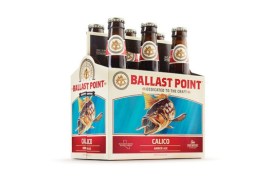 Ballast Point Brewing Company has been acquired by Constellation Brand for $1 billion. Ballast Point first started in San Diego out of a home-brew supply shop. It has a strong indie-brewing tradition and is based in America’s most prominent craft-beer cities.
 Ample Hills Creamery is a four year old Brooklyn scoop-shop in Brooklyn, known for their throwback flavors. Since opening their first stores in Prospect Heights, they have expanded to locations in Gowanus and stalls in Brooklyn Bridge Park, Gotham West Market, and Jacob Riis Park. Ample Hills has acquired $4 million in funding from venture-investment firms including Brooklyn Brewery co-founder Tom Potter and the founders of Seamless.
 Popular clothing brand Urban Outfitters, which also owns Anthropologie and Free People among other brands, has announced that they will be buying Philadelphia’s Vetri Family restaurant group. Over last few years, Urban Outfitters has been integrating food and dining into its stores, with Ilan Hall’s the Gorbals opening in the Urban Outfitter’s complex in Williamsburg. Urban Outfitters cited increased spending in the food industry and the decrease in traffic in actual stores because of e-commerce as issues to turn attention to food and dining within their brand.
 paigepapers.com