Operational Keys to Implementing the 80-20 Rule

Recently, we posted about the 80-20 rule, which says that roughly 80 percent of an enterprise’s sales will come from roughly 20 percent of its guests.  This powerful realization means that you as an owner need to know who those “valuable few” guests are and how to optimize your operations to serve them well and increase their numbers.  Below are some operational keys to help you do so.

 1)    Harness the Power of Your Service Flow

In order to take advantage of the 80-20 rule, you need to know which of your guests are your regulars.  A loyalty program can be a simple way to do so, but in order to utilize it well, you have to make the program visible and easy to use for your guests.  Whether you choose a program with reporting and advanced data collection, or a simple e-mail list, make sure that you integrate the sign-ups, check-ins, or other loyalty activities with the flow of your retail store.  Guests should be invited to use the program as they move through the enterprise, whether it is by a check-in point at the door, a message advertising a promotion for loyalty program members as guests browse the grab-n-go cases, or a sign-up and reward redemption reminder at the register.

2)    Integrate Your Systems

Make sure that your P.O.S. system, loyalty program, and contact-management program work together, so that you don’t lose track of valuable information.  Integration does not need to be high-tech.  Even if you just use an email program for sending emails to regular guests, make sure that your P.O.S. has an entry to record whether e-mailed promotions were redeemed and by which guests, for example through a unique promotion code.  Another simple option is a mobile loyalty app, which can have multiple features that integrate and offer easy data reporting.  For more about mobile loyalty programs, see our recent piece here.

3)    Empower Your Employees To Be Your Greatest Asset

Train staff so they know how important building a base of regular guests is to the enterprise, and ask them for their help in doing so.  Include in their steps of service a question asking guests if this is their first visit to the enterprise and whether they belong to your email list or loyalty program.  Be sure they know what special promotions, considerations, rewards or extra services are available to regular guests and that they use them.  And when staff encounters new guests, always be sure they make a spectacular first impression by welcoming new faces and inviting them to return.

Happy implementing…TaraPaige Group.
BKLYN LARDER: SPECIALTY AND PREPARED FOODS MARKET

228 Flatbush Avenue at Bergen Street (Prospect Heights) • 718.783.1250

bklyn larder 3

BKLYN Larder

Their Success…creating multiple revenue streams under one roof in a way that feels cohesive, organized, and inviting.  Walking into BKLYN Larder, a food lover will feel like the proverbial kid in a candy store.  And while there is literally candy (as well as chocolate, ice cream, and other sweets) all around, the store also contains a variety of crackers, pickles, meats, cheeses, and snacks, as well as a prepared foods bar and sandwiches made-to-order.  In addition, BKLYN Larder caters for holidays, parties, and meetings.   All these different business models could overwhelm a small space, but instead they work together in harmony to create an enterprise that is simultaneously bustling and intimate.

What makes this multiple revenue stream enterprise work is, first and foremost, the clear vision driving each component.   Since its opening in 2009, BKLYN Larder, from the owners of nearby Franny’s, has sought to be the go-to market for sustainable, local, homemade specialty food.  That ethos shines through in each piece of the market—from the traditionally-made cheeses, to the Mast Brothers chocolate bars, to the homemade pastries and prepared foods.

It is this vision that really helps BKLYN Larder create a synergy between its revenue streams. The vintage feel of an old-school market saturates the enterprise, harkening back to an era when the neighborhood market was the go-to place for foods of all kinds, be it a sandwich for lunch, a turkey for your holiday table, or the perfect basket of treats for a special gift.

Secondly, BKLYN Larder succeeds because the owners have kept each piece relatively simple.  They have a carefully chosen selection of prepared foods, pastries, and sandwiches, a straightforward catering menu, and a well-curated assortment of specialty items.  The store layout is likewise simple, so that guests are able to move through the enterprise freely and see each component easily against the minimalist design aesthetic.

BKLYN Larder is a model for making multiple revenue streams not only work, but work in a way that adds to its overall concept and charm.

Take Aways…When creating an enterprise with multiple revenue streams, keep in mind the vision for your enterprise and how each piece fits into that vision.  Make sure that each piece adds to your vision in some way other than additional revenue.  Each revenue stream should also enhance your overall concept.  Furthermore, it should be simple enough in its execution to keep it from overwhelming your operations and service flow.

Chipotle’s Steve Ells on Their Success

Steve Ells sits down with Denver Westword to talk about Chipotle’s 2-decade run and what it took to get there.

There are thirteen “characteristics” required of Chipotle employees, who now number more than 40,000. One is “infectious enthusiasm.” Another is “happy” — you must be happy. Half-time happy doesn’t cut it.

It’s those attributes — along with fast food focused on slow-food philosophies, resulting in burritos that make loyal fans very, very happy — that have elevated Chipotle Mexican Grill to worldwide dominance and earned its founder,Steve Ells, the title of Most Inspiring CEO in America last year from Esquire.

Read the full story here.

Maximizing Sales through Great Product Presentation

Creating a visually appealing, beautifully designed retail store can benefit your enterprise in a number of ways. Product presentation is one key design factor that has the potential to significantly improve sales. If your product is presented well and is easy for guests to see and pick up, they are more likely to purchase it, increasing your average check and your top-line performance. Below we discuss some key points to optimize product presentation in your retail enterprise.

Most importantly, make the product easily accessible to your guests. This means, first, that the products must be visible and physically accessible to guests when they walk through the service flow of your enterprise. Place beverage cases, pastry cases, packaged products, and merchandise where guests will naturally see them as they order, pay, and receive their food. For example, place beverage cases to the right (where many people naturally look) of the line to place an order, and small merchandise to the (guest’s) right of the register.

Accessibility also means creating as few barriers as possible between guests and the products. Place branded merchandise, non-food items, and grab-and-go food where guests can pick them up and look at them—on an open shelf or in an open cold case, for example. For pastry and other unwrapped food in cases, use glass or clear plastic cases that are well-lit, so that guests can see and be enticed by the items as they wait to order.

Cases also should be consistent in orientation and clearly labeled. While guests may not notice that each pastry is facing exactly the same way, they will notice the overall impression of care and attention that went into creating the presentation. The clean, tidy look of the case will also make them more likely to see individual items and be excited by them. Legible labels prevent staff from having to answer questions about each item. And a well-worded description can pique a guest’s interest and make them more likely to order the item described.

Your products are not only what will make you financially successful, but they are also the stars of your enterprise—so make sure they shine!

Happy Presenting…TaraPaige Group

Chipotle’s Serving Local Produce, Chooses Transparency for GMOs

Fast Casual reports Chipotle Mexican Grill plans to serve more than 15 million pounds of locally grown produce in its restaurants this year, up from its 2012 goal of 10 million pounds, according to a company press release.

At the same time, they are also reporting that Chipolte is one of the few companies that has chosen to be transparent about GMOs, which they are trying to get away from. The website  states that the company is trying to eliminate the use of GMOs, but that finding reliable sources of corn and soybeans that don’t have them is nearly impossible.

“We are changing the way people think about and eat fast food,” said Steve Ells, founder, chairman and co-CEO of Chipotle. “That means pushing ourselves to find the best quality ingredients — ingredients that have traditionally been available only in high end restaurants and specialty food markets – and making them available in way that is accessible and affordable.”


SPREADS: SANDWICH MADE-TO-ORDER ENTERPRISE

441 Park Avenue South at 30th Street (NoMad) • 212.758.5555

Spreads

Spreads

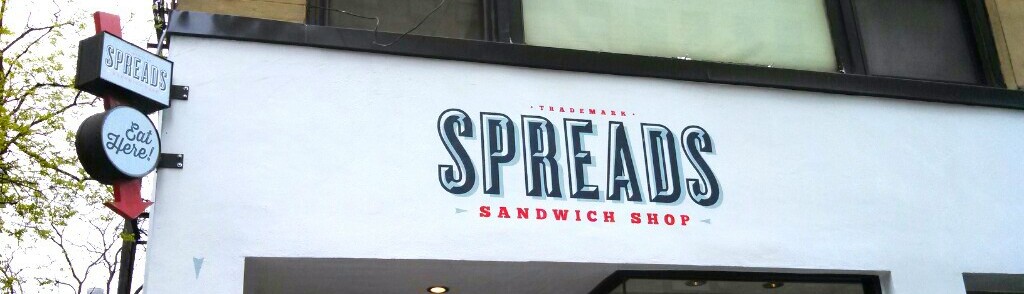
Their Success…Spreads capitalizes on optimizing their in-store layout for simple operations and an enjoyable guest experience, which ultimately maximizes guest throughput and check average. The owners of Spreads are veterans of the New York lunch scene, having run prepared foods market Dishes for years. Their experience shows in this latest venture, which opened in NoMad a few months ago.

Spreads stands out in the highly competitive New York lunch market for a number of reasons, but its overwhelming success is that its owners understand what guests want— to take a break from their busy days and feel good about their experience in the enterprise. Many lunch-goers are eating out in the middle of a packed schedule, with many things on their mind. They want their lunch to be easy and served by a friendly face.

Spreads accomplishes just that with a streamlined, intuitive service flow. When guests enter, the line formation is clear, a menu board legibly displays menu options, and the beverage case and add-on items are visible and easily accessible. Guests order from and receive food from their cashier. From entry to exit, guests know how each part of the ordering process works.

The simple, clear service flow at Spreads also makes managing service easier for staff, from the cashiers handling a lunch crowd to the line cooks crafting sandwiches. This means they are able to focus on interacting with guests on a one-to-one level, creating the personal experience that makes guests more likely to return.

Take Aways…A great design and strong aesthetics create the ambience of the enterprise, yet a functional layout completes the puzzle that optimizes your business model. An intuitive operational service flow allows for guests to enjoy your enterprise while maximizing the guest check average.

Forty Hours is Full Time Act of 2013 Gains Support

NRN reports on the U.S. Senate bill seeking to change the definition of a full-time worker as it applies to the federal health-care reform law.

The Forty Hours is Full Time Act of 2013 would redefine a full-time employee as one who works 40 hours a week or 174 hours a month based on a 52-week year.

Currently the Affordable Care Act states that businesses with more than 50 full-time workers must provide health insurance for full-time employees who work either 30 hours per week or 130 hours per month.

Read the full article here.

The Talent Report: Finding a Steady Supply with Potential

SHL, a global leader in talent measurement, releases the Talent Report, which provides a worldwide view of the value and potential of talent pools across industries, regions, and job functions. It’s a fascinating look at the global pool of candidates and their skill levels.

NYC Hospitality Alliance Event on Tuesday, June 11th, 2013, 9:30-11:30am

Seminar with the NYC Hospitality Alliance

Balancing Employee Relations, Payroll & the Law

When:
 Tuesday, June 11th, 2013, 9:30-11:30am

Where: NY Institute of Technology | 16 West 61st Street, 11th Floor (Map)

Cost: $20 member          $35 non-member  

Register Here

In today’s competitive and highly regulated business environment, it’s important for restaurants, hotels and nightlife venues to create a positive work environment for employees while complying with the various federal, state and city labor laws.

You do not want to miss this unique opportunity to hear industry leaders answer questions such as: 

  • How do you retain your best employees?
  • How can you protect your business against potential lawsuits filed by employees?
  • What are the best resources for finding and attracting qualified employees?
  • Wage & Hour, Immigration, Paid Sick leave AND much more!!!

Learn the in-and-outs of balancing employee relations, payroll & the law by joining The Alliance for an in-depth and interactive panel discussion with experts from the NYC hospitality industry.

Moderator: Andrew Rigie, Executive Director, NYC Hospitality Alliance

  • Angie Buonpane, Director of Human Resources, Union Square Hospitality Group
  • Michael Busch, President, Valiant Restaurant Division
  • Carolyn D. Richmond, Partner, Fox Rothschild LLP


Getting a Grip on Big Data: Translating Numbers

QSR gives a good run down of data and where companies need to be in terms of understanding it. With an ever-increasing load of software and social media and plug-ins, companies like Avero in New York City become necessary resources for operators who may have time but not manpower.

Unless an operator’s  background lies in analytics or statistics, the numbers may become obsolete, and need translation.

Read the full article here.