Papa John’s joins in Cleanup

Many restaurant chains are under 900pressure to go all-natural in their ingredients after numerous changes in menu from high profile chains like Chipotle Mexican Grill Inc. and Panera Bread Co. And now Papa John’s International inc. is eliminating ingredients used in their pizza and dips. Ten of the fourteen are being eliminated by the end of this year and the remaining four by the end of 2016. But these costs are estimated at and added expense of $100 million each year. John Schnatter, founder and chief executive officer, has been making changes with their menu since 1996 with changes like removing fillers from the meat used for toppings and improving the pizza dough. They have removed mono-sodium glutamate from its ranch dressing and pulled trans fats form its garlic sauce. The company has also pulled cellulose, an anti-caking agent, from its mozzarella cheese. Papa John’s pizza is generally more expensive than its competitors like Pizza Hut and Domino’s but boasts their “quality ingredients for a better pizza.” While prices in pizza will increase in price corresponding with the expenses in producing pizzas with higher-priced natural ingredients, Schnatter believes that their customers have shown willingness to pay a dollar or two more for their pizzas. Papa John’s has recently started posting their ingredients online and pushing on menu transparency. With the shift in ingredients, Schnatter hopes it will put the chain in a position that’s hard for competitors to match.

To read more on the changes in Papa John’s, click here
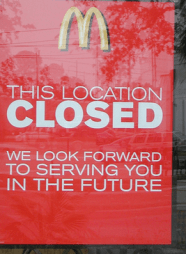
The Big M loses it’s Size

For the first time since 1977, one of the largest restaurant chains inMcDonalds-Closing the world, McDonald’s, is projected to close more stores than open in the United States. Over the past two years, McDonald’s has been suffering from decreasing revenue and drops in profit from stores worldwide. Increasing numbers of competitors in the United States, economic instability in Europe and strict food safety regulations in Asia have effected the performance of McDonald’s. Already in the first quarter of 2015, McDonald’s closed 350 stores performing poorly in Japan, United States and China hoping it will drive profits upward. McDonald’s CFO Kevin Ozan is implementing turnaround strategies to “win over the millions of burger-eaters.” The company’s approach within limited service fast food is labeled to be outdated and far from trending dietary factors. This generation, the Millennials, are prone to be more health-conscious and interested in key words like “organic, free range, locally grown” which are areas that McDonald’s is incoherent with. With McDonald’s lagging attempt to follow trends, competitors continue to grow like Chipotle which caused the biggest drop in sales to McDonald’s with its entrance into the limited service industry. McDonald’s has not officially disclosed the number of stores closing but it is speculated that a target of 700 restaurants with poor sales will be shutting down this year.

To read more from grubstreet, click here.

Food Companies Come Clean

Over the last six months multiple food companies have announced plans to be more transparent with their ingredients and Panera Bread is the latest to jump on the bandwagon. The bakery-café chain Panera_Logo_announced that by the end of 2016 they plan to remove over 150 ingredients from their inventory which can be found on the “No No List” published on their website today.
Other companies that have made similar commitments include Nestle, Hersey, Pepsi and General Mills promising to eliminate a variety of artificial preservatives, flavors and colors, different kinds of sweeteners and meat from animals raised with antibiotics. Chipotle Mexican Grill also announced this week that all of their restaurants are GMO-Free meaning that none of their ingredients have been genetically modified. Chipotle co–CEO told CNN Money that “Chipotle is really showing that there’s a better way to dUnknowno fast food.”

In the past years, GMO’s have become a hot button issue, as there is concern regarding the safety of these genetically modified crops. According to the USDA GMO’s are in about 80% of conventional processed food in the United States. With little research confirming the negative effects of GMO’s many wonder if companies putting forth such effort to go natural is necessary. Additionally, most of the companies have been very careful with their placement stating that such changes are to meet consumer demands rather than taking a stance on the issue.

How do you feel about GMO’s? Do you think it’s necessary for these food giants to change their recipe for success? Leave us a comment and let us know!

To read more from the New York Times, click here

Effects of Record High Dairy Prices

As dairy prices continue to soar, favorite menu items at restaurants have become more costly to produce. According to The National Milk Producers Federation, average farmer’s milk prices rose to $2.16 per gallon in September; this is the highest level on record. Many dining chains have been feeling the effects of these high costs which have been high throughout the year. For example, Chipotle recorded a 20% increase in sales, however executives stated that the higher food costs for items such as cheese and sour cream affected the chain’s profit margins in the quarter.

The Cheesecake Factory, a chain which relies heavily on cream cheese for the cheesecakes stated that increased dairy prices cost them $4.3 million in the quarter. According to Mary Keough Ledman, an economist specializing in dairy markets, the prices have soared due to a global slow down in milk production. “The path to these record high prices was supply-driven..It was kind of the perfect storm — European output was lower, Oceania’s output was lower, and China’s was lower.”

Both restaurants as well as major suppliers such as Kraft Foods or Hershey are being affected by the higher dairy prices and will begin to implement price increases on their products to deal with the dairy cost spike. To read more about the struggles restaurants and suppliers are facing due to the price increases, click here

Pizza On The Rise In Fast-Casual

According to Telsey Advisory Group, pizza will be the next trend in fast-casual dining. Perhaps the reason this is not yet a craze in fast casual concepts is because the cooking time for pizza is typically longer than say a sandwich or a burrito. A research firm, NDP Group, has showed that new pizza chains are using smaller ovens that can cook pizza in a shorter amount of time. Tom Ryan, founder of Smashburger, also is the founder of a fast-casual pizza chain called Live Basil Pizza. In it’s six restaurants the company uses gas-fired brick ovens that enable the pizzas to be produced at a faster pace. According to Tom Ryan, another reason the chain is successful is because guests are opting for Neapolitan pizzas over deep-dish pizzas which have a longer cooking time.

Warren Solocheck, vice president at NPG states that, “The concept of being able to have a fast casual pizza restaurant has been proven..it is now all about who has the capital to expand.” Buffalo Wild Wings has invested $9 million dollars in an L.A-based pizza chain, PizzaRev, and now operates 11 locations throughout California as well as five franchised restaurants in Utah and Minnesota. Chipotle has also invested in Pizzeria Locale which is mostly focused in Denver.

To read more about the rise of pizza in fast casual dining, click here

Olive Garden’s Re-Branding Strategy

In an effort to gain back customers from newer fast casual chains such as Panera Bread or Chipotle, Olive Garden is rolling out a two phased re-branding strategy. Olive Garden has always advertised themselves to be the family-friendly neighborhood Italian dining option; now they will strive to maintain the same family-friendly vibe just at a slightly more sophisticated level. Darden Restaurants, Olive Garden’s parent company, announced last March that the brand was in need of a ‘renaissance,’ which would include updated décor, a new logo, smaller lunch portions, online ordering and speedier dine-in service.

Olive Garden’s new décor has a more modern feel to it and has parted ways with the monotone dull interiors. They are literally tearing down walls as part of the remodel to give the spaces a more open feel, redecorating with pop colors and modern art. The logo had not been updated in over fifteen years so Lippincott, a design firm, assisted in simplifying the old brand logo and replacing the tagline with “Italian Kitchen” rather than “Italian Restaurant” to connote a faster, higher-quality operation.

Hopefully these efforts will not be in vain and the chain can win back some of its customers. To read more about the changes and updates taking place at Olive Garden, click here

Chipotle to Add Tofu “Sofritas” to Permanent Menu

After a successful test run for Chipotle’s vegan protein option, tofu sofritas, in the West Coast last year, the soybean-based staple will be making its way to Chipotle’s permanent menu in New York and Boston locations beginning March 3, announces Grub Street. Chipotle describes sofritas as “organic shredded tofu braised with chipotle chilies, roasted poblano peppers, and a blend of aromatic spices. Hodo Soy Beanery in Oakland supplies Chipotle with GMO-free tofu.

Chipotle Invests $10 Million in Mobile Payments

In an effort to maximize throughput and eliminate the time-consuming steps involved in cash and credit card transactions, Chipotle is investing a few hundred dollars per location in adding mobile payment technology to its ordering app. This isn’t about staying current with the latest technology trends for co-CEO Steve Ells, but rather a worthwhile investment to ameliorate guest convenience and foot traffic for the long-run. The updates to Chipotle’s current ordering app will process payments through a bar code scan or Bluetooth connection.

“Secret” Menus, or Not-So-Secret Menus…

Mark Wilson, contributing writer at Fast Co. Design, detailed the ins and outs of “secret” menus at restaurants including Chipotle, Starbucks and In-N-Out Burger. Chipotle’s “Quesarito,” Starbucks’ 170,000 customizable beverage permutations and In-N-Out’s “animal-style” fries are a few of the secret (or not-so-secret) menu options that add to these restaurants’ mystique and allure.

“I think of it as the customer’s the brand manager,” Chris Arnold, Chipotle’s Communication Director says. “The experience of the public is something different for everyone, like an iPod in a way. How many billions and billions of iPods are in circulation, and yet no two [playlists] are alike. You buy a burrito, I buy a burrito. We pay the same thing for it, and they’re two very different things.”

Read about Wilson’s comically relentless quest to order the arcane “Quesarito” at Chipotle, amongst his other classified culinary discoveries.

Pizzerias Look to Chipotle as Model

With the onslaught of burger, Mexican and and sandwich retail enterprises, pizzerias are one sector that has yet to be amplified in the fast-casual market. That’s where Pizzeria Locale comes in. The Denver restaurant, that Chipotle helped finance, serves pizzas in the same fashion Chipotle serves burritos: made to-order quickly, individually tailored and with higher quality ingredients than its low-end competitors.

Fast casual restaurants like Chipotle and Panera Bread Co. are stealing market share from casual restaurants like Olive Garden where food takes longer to arrive, and fast food chains like McDonald’s where quality is not in the picture whatsoever.