Momofuku Nishi Cements an Unexpected Trend: Annotated Menus

yours_sincerely.0.0.jpg

The Menu at Yours, Sincerely

The opening of Momofuku Nishi in Chelsea generated buzz for lots of reasons, and it remains difficult to get a seat at David Chang’s Italian-Korean-Don’t-Call-It-Fusion restaurant. If you have managed to eat there though, you might have noticed that the menu is heavily footnoted with information about the dishes, from “Notes of parmesan come from chickpea hozan” on the Cacio e Pepe, to “Kathy Pinsky’s Bundt Cake 2.0” on the Pistachio Bundt Cake.

Including these footnotes does more than just provide information about the dishes, which is useful in it’s own right; it lends the menu (and the restaurant, by extension) more personality. Granted, it is a very specific personality – quirky, irreverent, and casual – but it’s a personality that many restaurants are striving to achieve, especially as fine dining falls out of fashion. So it’s no surprise that other restaurants have followed suit with menu annotations of their own, including Bushwick cocktail bar Yours, Sincerely, where they’ve crammed the drink list with handwritten notes, and included a flowchart to help you choose a drink. It should also be noted that the speakeasy-style Pouring Ribbons went a similar route with their menu years ago, adding scores for each drink on scales from “refreshing to spiritous” and “comfortable to adventurous,” along with a graph on the first page (in case you’re a more visual orderer).

We certainly can’t recommend that every restaurant starts doodling on their menus – in the wrong context, it can be off-putting and confusing. But if the atmosphere of your enterprise is shooting for approachable and quirky, this is one way to make the menu more engaging. And when guests are engaged as soon as they see the options, they might just notice a drink or dessert they didn’t even know they wanted.
Competitors See Opportunity in Chipotle’s Troubles

The Chipotle food-safety saga has been impossible to ignore for the last few months, as everyone from hungry college students to Wall Street traders are forced to reckon with the chain’s downfall. For other fast-casual and fast food restaurants, however, the news is an opportunity to snatch some new guests. As we wrote earlier, Sweetgreen has already earned the moniker “the new Chipotle” to some, and they’ll undoubtedly benefit at least somewhat from the Mexican chain’s decrease in sales. Others are hoping that they can improve their image by highlighting food safety practices – and surreptitiously reminding everyone that they haven’t caused any norovirus outbreaks recently.

Canadian chain Freshii is twisting the knife by offering half-priced Mexican food while Chipotles everywhere are closed for an all-hands meeting and regroup. They claim that this is to “help consumers through these dark hours,” and that “the least [they] could do was look after their customers while Chipotle paused to recalibrate.”

White Castle, while not a direct competitor of Chipotle, has decided now would be a good time to launch a website devoted entirely to advertising their food safety practices. The website is unambiguously named http://www.WhiteCastleClean.com, and it showcases their commitment to “promoting food safety, cleanliness and transparency.”

Chipotle meanwhile is struggling to recover while their stocks are in free-fall. CEO Steve Ells has made repeated statements about their new food safety practices, and promised that they will release any information about the source of the outbreaks last year. This Super Bowl, they are offering $50 currency card and a limited-edition gift from the makers of Tabasco sauce to anyone who uses their catering service.

To read more, click here and here.


Sweetgreen Expects a Full Half of Sales to Come from their App this Year

The fast-casual salad chain Sweetgreen had a big year this year, opening 3 new stores in New York alone, moving their headquarters to California, and being dubbed “the next Chipotle” by CNN and others. One could argue that their success is built on many things – timing, a growing demand for healthy, sustainably sourced foods, their youthful aesthetic (one of their limited edition salads last year was named in honor of a Kendrick Lamar song) – but it would be a mistake to underestimate the role mobile has had in that success.  So far, 21% of Sweetgreen’s sales come through their custom app, and they expect that number to jump as high as 50% this year.

The appeal of mobile ordering is understandable: with lunchtime lines out the door, the Sweetgreen app allows guests to order from the office and pick up immediately, and once downloaded, a rewards system makes it more likely for them to keep visiting. Additional features like the ability to flag dietary restrictions, add favorites, and integrate with the iOS health app, add an additional layer of appeal.

Of course, for many small chains it simply isn’t feasible to build out this kind of ordering system. Sweetgreen has had the benefit of $95 million in total investments in recent years, and they’ve clearly dedicated a fair amount of that to building their mobile presence. But they do serve as a reminder of the kind of return such an investment can have.

To read more, click here.

UberEats Launches in Ten Cities

uber-eats-new-york-los-angeles-denver-spain-chicago.png

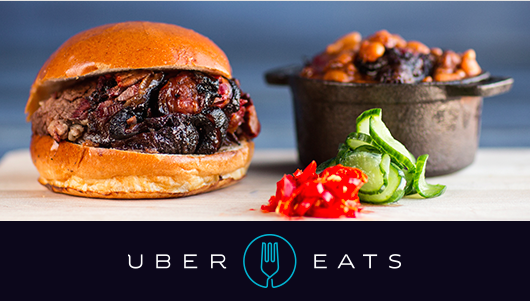
New York, along with 9 other major American cities, can soon benefit from Uber’s extensive network of drivers to satisfy their lunchtime munchies in record time. The company is finally launching UberEats, which they hope will ultimately compete with Grubhub and Seamless, although their existing ten-minute lunch delivery still has a very small user base. New York, Chicago, L.A., San Francisco, Austin, Houston, Dallas, Atlanta, and Washington, D.C. should all be able to use UberEats by March.

Drivers will be able to opt in to or out of the new program if they prefer not to mix hot foods and New York gridlock, but Uber is charging a flat delivery fee of $5 to encourage more drivers to participate. And true to the sharing-economy, there will also be an UberPool version which allows users to pay only $1 and have their food delivered with other orders in the area. With more and more food delivery companies joining the fray, each will have to work harder to stand out – the promised shorter delivery times Uber offers could go a long way towards doing that, especially with Grubhub and Seamless averaging over 45 minutes.

To read more, click here.

Patio Dining with Pets Under Fierce Debate

Dog owners all over New York have been celebrating the new State law which would allow them to bring their dogs onto restaurant patios while they eat. But the department of health isn’t too thrilled about this doggy dining, and they’re hoping to impose regulations that would make it almost impossible for restaurants to participate. The regulations include extensive signage specifying where dogs can and can’t be, tag checks at the door to ensure dogs are properly registered, and barriers between dining areas and sidewalks to prevent the dogs from touching any pets or people outside.

In a statement to the press, the department of health said that these regulations “explain to restaurants owners how to protect the health and safety of their patrons, and passersby.” But proponents of the original bill, including members of the restaurant industry, feel that the regulations completely neuter its intent.

The Department of Health is encouraging feedback through January 26th on their website, and will hold a public hearing on that day at their Long Island City offices.

To read more, click here.

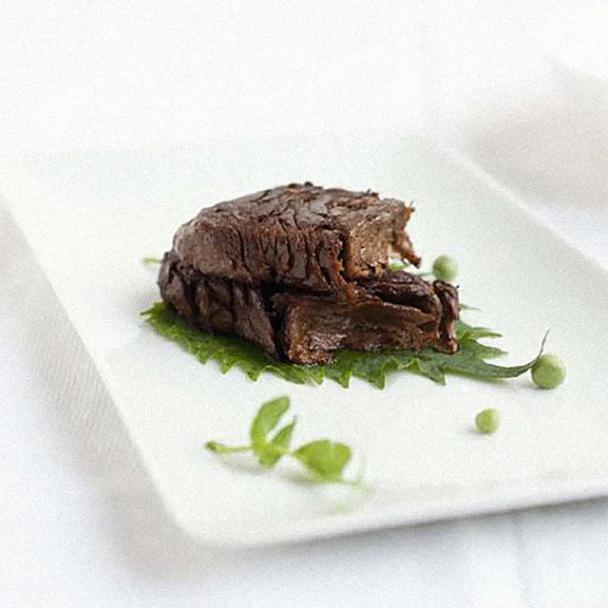
Dutch Start-up Wants to Bring You a Better Vegan Steak

3054886-inline-i-1-vegan-steak.jpg

Photo via Fast Company

Demand for meat substitutes has been growing steadily in the U.S. as more consumers become aware of the environmental and animal welfare impacts of farmed meat, and the recent report from the World Health Organization labeling processed meat as carcinogenic will likely drive that trend faster. Although there are still very few true vegetarians in the United States – only 2 to 5% of adults in the states currently eat no meat, and many of those will return to their carnivorous lifestyle at some point in the future – many more people are now making attempts to eat more meatless meals.

But although the demand for plant proteins is there, the supply still has a long way to go. Because of processing costs, meat substitutes still run about as much per pound as organic meat, and taste and texture turn off many would-be herbivores. In the Netherlands, where a small landmass and substantial environmental awareness makes the push toward vegetarianism even stronger, companies are using engineering to solve this problem. Most notably is Vegetarian Butcher, a Dutch company which has developed “the world’s first vegan steak.” The machine responsible for this steak is called the Couette shear cell device, and it uses rotating cylinders and temperature variation to spin liquid soy protein into a slab with the texture of steak. Besides better mimicking the taste and mouthfeel of a  good tenderloin, this process is much cheaper than current vegan meat production.

Although it’s still impossible to get this faux steak in the States, Vegetarian Butcher is currently expanding and hope to be available here soon. Although they’ll have some competition from companies cropping up here, they hope to work more in partnership than opposition. As costs come down and demand goes up, there may just be enough room in the market to me that happen.

To read more, click here.

Papa John’s Goes “All Natural” With Ingredients

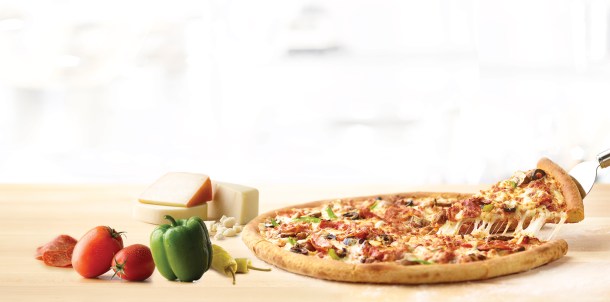
works-ingredients.jpgPapa John’s, whose motto of “Better Ingredients, Better Pizza” you likely know even if you’ve never touched a slice, is making moves to uphold that promise by removing a host of artificial ingredients from its pizzas. “We closed out 2015 announcing our commitment to serve chicken raised without antibiotics and are ringing in the New Year artificial-flavor and synthetic-color free,” said Sean Muldoon, Papa John’s Senior Vice President of Research and Development. This might lead one to wonder what made the ingredients “better” before the change, but to its credit Papa John’s is the first national pizza chain to make a move like this.
It’s unclear whether going all-natural will help Papa John’s recover from a season of poor sales and falling stocks, but it seems like management is banking on the consumer demand for transparency (or at least the appearance of transparency) in ingredients that once helped Chipotle rocket to the top. Hopefully they can do so on a national scale without the same food safety issues that plagued the Mexican chain.

To read more, click here.

The Pennsy Now Open for all Your Upscale Food Court Needs

pennsy-ny0116.jpg

Photo via travelandliesure.com

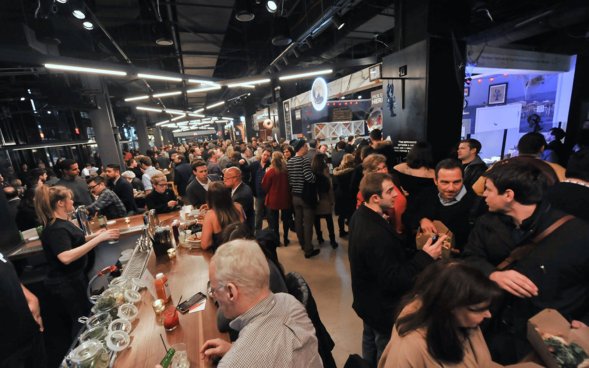
The Pennsy, the new upscale food court with celebrity chef credentials, is now open in the space formerly occupied by Borders Penn Station. Along with a full service bar, 8,000 square feet, and additional outdoor space, The Pennsy boasts stalls from Marc Forgone, Franklin Becker, Pat LaFrieda and Mario Batali (the latter in collaboration with Mary Giuliani through Mario By Mary). There you can get everything from lobster rolls to tempeh sandwiches, and Italian panini to  gluten-free bowls at The Little Beet.

So far The Pennsy has a 4-star review on Yelp, indicating it’s already getting a lot more love than its eponymous railway station. Hopefully this carefully curated food hall can lighten the burden of wading through crowds to catch the LIRR

To read more, click here.

Pete Wells’ Brutal Review of Per Se

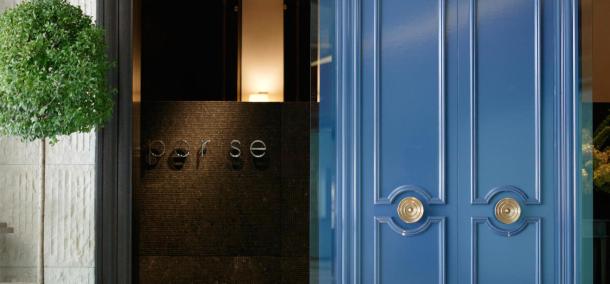
TK.com_PER.SE_homepage_1a_0.jpgPer Se, the $325-a-plate dining experience which until today ranked among the only restaurants The New York Times deemed 4-star worthy, just received a deeply critical review from Pete Wells. Wells has been a restaurant critic for the Times since 2011, and he recently gained a little internet notoriety outside the circle of dedicated Times readers by giving a generally positive review to Señor Frog’s, the loosely Mexican chain whose motto (“Unleash Your Fiesta!”) tells you probably all you need to know.

The new Per Se review, which knocked the restaurant down a full 2 stars, is further indication that Wells is taking a hard look at price tags and complete experiences, and refuses to buy-in to old standbys if they do not continue to deliver. This attitude is perhaps best summed up when he writes

With each fresh review, a restaurant has to earn its stars again. In its current form and at its current price, Per Se struggled and failed to do this, ranging from respectably dull at best to disappointingly flat-footed at worst.

Wells had plenty of specifics to critique, ranging from the food to the service to the “price-gouging” of add-ons like fois gras. For $325, Wells fairly expects that every dish would be extraordinary, and his critiques of the dishes pull no punches. Perhaps most brutal, though, are the descriptions he gives to the restaurant itself, which he calls “grand, hermetic, self-regarding, ungenerous” and one of “the worst food deals in New York.”

While there are undoubtedly those who will continue to go out of their way to visit Per Se, or regard it as an essential experience in New York fine dining, perhaps the two lost stars indicate a larger changing of the guard, and an exciting move toward greater innovation in dining in 2016.

To read the full review, click here.

‘Shark Tank’ Throws Its Weight Behind Ugly Food

sharktank_wide-0b24a0142869dfb629141dd024d95289b32c473f-s800-c85.jpg

Photo via NPR.org

We wrote recently about the movement, now gaining traction around the world, to reduce food waste by selling and promoting ugly produce – the kind of fruits and vegetables that are still perfectly edible, but because of minor blemishes or abnormalities will often bypass the grocery store and head straight for the landfill. Besides the troubling statistics on food waste in a country where 48 million Americans struggle to get enough to eat, this discarded produce is also a major source of methane, a potent greenhouse gas.

The ugly food movement is the sort of appealing initiative that can combat social ills (like hunger and climate change) while still providing a clear path to profitability. Both those factors seem to be paying off with some major momentum: on Friday night’s episode of the reality show Shark Tank (the ABC hit that has entrepreneurs pitch their start-ups to a ruthless panel of investors), investor Robert Herjavec plunked down $100,000 for a 10% stake in Hungry Harvest, an ugly food delivery service. This number was twice what CEO Evan Lutz had originally asked for.

Hungry Harvest operates by “rescuing” food which would otherwise be discarded from farmers and grocery stores, and selling it at a 20 to 30% discount. For each bag of produce delivered, the company also donates a meal to the hungry. As of the show’s taping, Lutz said Hungry Harvest had 600 subscribers, but expected that number to double from Shark Tank publicity alone. The investment and press combined put Lutz in a good position to expand quickly and become a household name, but expect competitors to crop up as well. Whichever company ultimately takes the lion’s share of the market, ugly food is good news for everyone.

To read more, click here.