Start-Up Spacious has a Vision for New York Restaurants

As more and more businesses (particularly in the tech start-up sphere) forego traditional offices, the demand for alternative working spaces will continue to increase. The new start-up Spacious seeks to capitalize on that, by turning dinner-only restaurants into co-working space during the day. Spacious owner Preston Pesek sees it as a way to “reclaim the city for creative professionals.”

A Spacious membership costs $95 per month, and includes unlimited access to their available workspaces, as well as WiFi, coffee, water, and conference rooms. Currently their only actual space is Daniel Boulud’s DBGB Kitchen and Bar, so Spacious is offering a 20% sign-on discount for members who join now. Eventually they hope to add more options throughout the city, and possibly include lunch in the offer as well.

The benefit to the restaurant (besides exposure) is a profit-sharing agreement, but in some cases the exposure might be enough to justify the risk. According to a  DBGB manager, the partnership has already brought more dinner traffic to the restaurant from Spacious members who see the space during the day and invite back larger crowds at night.

To read more, click here.
Dig Inn CEO Takes Disruption To New Heights

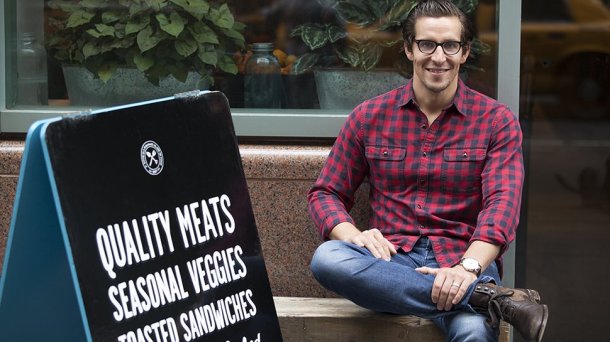
Dig Inn CEO

For Adam Eskin, CEO of Dig Inn, being disruptive meant severing ties with standard supply chains and developing relationships with local farmers in order to source ingredients for his New York City-based concept. The company has even helped farmers buy land and equipment and is now looking into buying farmland.

“Broken,” is how Eskin described today’s food system, which was set up decades ago to deliver food to masses of people as quickly as possible. That goal has led to obesity and a failing agriculture system, which inspired him to launch Dig Inn, a concept serving only from-scratch and seasonal food. Menu items include: flame-grilled wild salmon, Sicilian cauliflower, roasted kale, five-spice meatballs made with chicken or pork and free-range roasted turkey from Koch’s Turkey Farm in Tamaqua, Pennslyvania.

Dig Inn’s seasonal and innovative menu means talented chefs must always be in the kitchen, and Eskin admitted that finding NYC chefs who want to work in a fast casual setting can be challenging. Eskin found a solution by developing his own in-house culinary school, where he transforms employees into chefs. In an effort to inspire and help his chefs grow, Eskin partners with some of New York’s high-end restaurants, including Danielle, to provide them with the opportunities to work in their kitchens. It’s a win, win; young chefs study under pros and then put new skills to use at Dig Inn.

Read more here.


Cold Brew In An Ice Pop!

cold brew pop

Cold-brew coffee, emphasis on the cold, is what you get in this new ice pop from Brewla, a company whose other flavors are fruit based. The bar is a lightly sweetened mixture of the coffee and organic milk.

Brewla was founded by Daniel and Rebecca Dengrove, a brother and sister team with over 15 years of experience in food science and technology. The idea for Brewla Bars was born when the budding entrepreneur Daniel noticed an untapped market at the intersection between popular high-end juices and the boom in trendy frozen yogurt. A rising star in the beverage industry, Rebecca zeroed in on teas with health boosts. Although the concept was originally for a brick-and-mortar store, the siblings’ full-time jobs and cross-country residences created roadblocks, so Rebecca rented space in the industrial kitchen at her old graduate school, decorated a rolling freezer, and Brewla Bars began.

Brewla Barista, box of five, $5.99 at Union Market stores in Manhattan and Brooklyn, brewlabars.com.

More Restaurants Planning on Eliminating Tips

According to a new survey conducted by the American Express Restaurant Trade Survey, more restaurants around the country are planning on going tip-free.

Of the 503 restaurants surveyed, nearly half have either adopted or plan to adopt a no-tipping policy. Further results were:

  • 18%: Already initiated a no-tipping policy
  • 29%: Intend to make the switch
  • 27% Pro-tipping and have no plans to change
  • 17%: Open to making a move if more of their colleagues do
  • 10%: Undecided

Read more here

Food Loves Tech: Touch The Food Chain Of Tomorrow, Today

foodlovestech

A collaboration with Vayner Media, this eats-of-tomorrow gathering in the Waterfront Tunnel in Manhattan will allow attendees to see, smell, touch and taste the food culture of the near future.

Food Loves Tech is your chance to walk up to vertical farms, taste-test crickets, review dozens of food system apps, and talk to the inventors behind juicebots and beerbots, food computers for your home, and smart kitchens that listen to your food.


Event details are as follows:

Food Loves Tech
June 11–12, 2016
The Waterfront
241 11th Ave (at 27th St), NYC

Buy Tickets Here.


The Wizard Retools His Lab

David Bouley dreams of engineering a whole different concept of a restaurant.

The famous chef’s eponymous restaurant opened at 165 Duane Street, Tribeca in 1987.  According to Bouley, the restaurant will be going “on sabbatical” and then reopening in a smaller space (planned for Tribeca) with a mission of healthful eating.  The new space will accommodate only 20-25 seats and open five days a week.  The Bouley that New Yorkers have come to know over the past thirty years will be gone in a few months.

In recent years, Mr. Bouley has become obsessed with health issues.  Towards the end of the year, he will engage in a deep study of the relationship between health and food.  He plans to take nutrition classes at New York University and consult with doctors and experts, internationally.

The new restaurant’s mission will be to optimize health.  Tasting menus will be developed to address a variety of dietary restrictions and medical concerns.  “Food should give you calories that you burn off, not calories that you store,” said Mr. Bouley.

David Bouley plans to rejuvenate his restaurants and projects (Bouley, brushstroke, Bouley Test Kitchen and Bouley Botanical) and himself.  He is quoted as saying “Gastronomy and science, meeting together.  I want to learn how to do that better”.

Please click here to read more…

Piping Hot or Chilled, Carrot Soup with Spice

Carrots are a kitchen workhorse. They’re second only to onions as one of the most common ingredients in our savory, and occasionally sweet, recipes.  They go in our salads, stews and soups. We eat them raw with dip, roast them, or quickly sauté them for dinner.

Spiced Carrot Soup with Lime is a recipe that moves away from the traditional, one-dimensional, sweet, thick carrot soup.  Using a technique known as tarka in Indian cuisine, cumin and mustard seeds are sizzled in coconut oil, adding extra flavor.  Ingredients needed for this creation include coconut oil, medium onions, chopped ginger, minced garlic, turmeric, coriander, cayenne, salt, young carrots, daikon radish, mustard seeds, cumin seeds, serrano pepper, cilantro leaves and lime wedges.

This soup may be served hot from the pot for dinner, or it may be served chilled during the day.  It is best with young, long and slender carrots, which are considered fresher and tastier than the carrots from jumbo bags.

Carrots are a vegetable with many health benefits, including the improvement of vision.  Carrots are rich in beta-carotene, which is converted into vitamin A in the liver.  Vitamin A is transformed in the retina, to rhodopsin, a purple pigment necessary for night vision.  Beta-carotene has also been shown to protect against macular degeneration and senile cataracts.  Carrots also help prevent cancer, slow down aging, promote healthier skin, and help prevent infection.

Now is a good time of year to enjoy just-harvested new-crop carrots.  So let’s get cooking!

Please click here to read more…

Hudson Valley Real Estate Eating Up Our Produce

North of New York City, a battle is brewing between real estate and family farming.  A boom driven by City residents seeking refuge in greener, quieter locales is displacing our local food system.  Since 1982, real estate developments have transformed more than 471,000 acres of New York farmland, according to the American Farmland Trust data.

For example, Elizabeth Ryan’s Stone Ridge Orchard is not for sale–but she’s been offered millions for the land.  And her lenders think “it’s a bad business decision, not to cash out land for houses.” Ms. Ryan has support, though; a group of New York City lawmakers has teamed up with another preservation group, the Scenic Hudson Land Trust, to create a plan to preserve the region’s existing food system. As part of the initiative, lawmakers are seeking for the first time to set aside money in the municipal budget for the preservation of farmland in the Hudson Valley. “The risk to farmland is a risk to healthy food for New York City residents,” Councilman Daniel R. Garodnick, Democrat of Manhattan, said.

New York City is plighted by urban food desserts, and farmers markets are helping to alleviate that problem.  As such, Mr. Garodnick has proposed spending $50 for a conservation easement program that would pay farmers the development value of their land and impose a deed restriction to permanently protect the property from development.

“This modest, but visionary, strategic investment will make the city a national model of how to create a more equitable and secure regional food system,” said Steve Rosenberg, executive director of the Scenic Hudson Valley Land Trust.  To read more about the proposal, including May De Blasio’s position and the concerns of a declining farmer population, click here.

FDA Issues Salt Guidelines

Last Wednesday, the FDA took another step is pushing back the American diet to its more healthful days; the Administration issued draft guidelines with voluntary targets for salt reduction.  The hope is to reduce salt intake from an average 3,400 milligrams per day to 3,000 milligrams in two years and down to 2,300 milligrams in a decade.

The proposal comes with “overwhelming” scientific evidence and would purportedly saved thousands of lives in the years to come.  “Today’s announcement is about putting power back in the hands of consumers, so that they can better control how much salt is in the food they eat and improve their health,” said Health and Human Services Secretary Sylvia Burwell.  According to the Centers for Disease Control and Prevention, more than 70 percent of the sodium consumed in the country is already in food before it reaches the table.

“The majority of sodium intake comes from processed and prepared foods, not the saltshaker,” noted the F.D.A. statement.

However, some scientists have an opposing opinion: David A. McCarron, a research associate in the Department of Nutrition at the University of California, Davis, said a number of studies had shown risks of too little salt. “Going below 3,000 [mg] is dangerous — that’s what the data has shown,” said Professor McCarron, who has consulted for the food industry.

But F.D.A. scientists said the health advantages of getting down to the recommended 2,300 milligrams a day were beyond dispute. The science has been well vetted,said Susan Mayne, director of the Center for Food Safety and Applied Nutrition at the F.D.A.

To read more, click here and here.

Starbucks and Anheuser-Busch Team Up

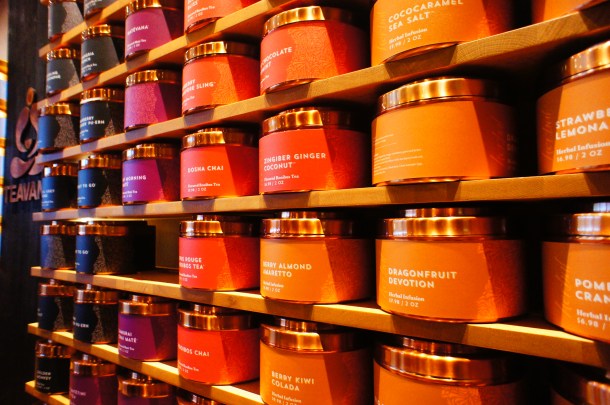
Tea Wall detail.JPGIn the beverage world, there are few names bigger than Starbucks and Anheuser-Busch. The two dominate any discussion of coffee or beer respectively, but they’re now partnering up to help capture the market of a third beverage – tea. Specifically, Starbucks is looking to begin selling their Teavana line of teas as ready-to-drink specialty bottles in grocery stores around the world. They decided to partner with Anheuser Busch to handle the bottling aspect of the operation, and if spokespeople for both companies are to be believed, there is plenty of revenue to go around.

Tea is currently a billion-dollar market in the US, and Teavana was Starbucks’ biggest acquisition ever when they bought it for $630 million in 2012. The original retail strategy for the brand, which involved revamping the Teavana tea bars around the country, didn’t live up to the “$90 billion global market opportunity” that Starbucks CEO Howard Schultz originally predicted.

Starbucks’ new partnership and strategy represent a significant pivot to the ready-to-drink market. They expect to release the new line in over 300,000 US supermarkets and convenience stores by next year. The move is also a possible save for Anheuser-Busch, who have seen sales and production suffer in the wake of the craft beer movement.

To read more, click here.