Rwanda Documentary & Blue Marble Ice Cream

The documentary Sweet Dreams premieres tomorrow at Quad Cinema. Sweet Dreams illustrates the remarkable story of Rwandan women who teamed with Blue Marble Ice Cream’s founders in pursuit of gaining financial independence. The triumph and entrepreneurial spirit of these empowered, industrious women is inspiring to any business owner.

After the 1994 genocide, Rwandan citizens needed to rebuild their sense of community. Rwandan theater director Kiki Katese founded Ingoma Nshya, the country’s first and only female drumming troupe. While drumming was an effective means of therapy, these women needed a way to support themselves financially. Consequently, Katese reached out to Alexis Miesen and Jennie Dunas of Brooklyn’s Blue Marble Ice Cream. From there, the Hutu and Tutsi women learned the ice cream trade down to cone.

Inzozi Nziza (“Sweet Dreams”) will be Rwanda’s first ever local ice cream shop. Sweet dreams is the heartening product of women helping women gain prosperity, independence and confidence on both a personal and business scale.

Food for Thought: Chipotle’s Partnership with Huffington Post

Two days ago Huffington Post launched Food for Thought, Chipotle’s latest brand marketing strategy. Food for Thought is a HuffPost section dedicated to promoting awareness about healthful habits and sustainability practices. Contributing writers from all walks of life including doctors, lawyers and food authors discuss everything from food legislation to finding seasonal produce. This strategic move on Chipotle’s behalf is timely considering the recent shift of priorities since McDonald’s was its major investor. Now more than ever Chipotle is making efforts to be an industry leader in sustainable, GMO-free fast food chains.

Mark Crumpacker, Chipotle’s Chief Marketing Officer, writes that “people are more aware than ever of the impact that food has on people, animals and the environment.”

Through this partnership, Chipotle hopes to change customers’ perceptions of them as the burrito joint that’s owned by McDonald’s, to the Mexican fast food chain that genuinely cares about the sourcing of its ingredients and our affect on the environment.

Restaurant Inspection Letter Grades Become Ubiquitous Online

Thanks to a savvy coder, the public no longer has to rely on only one source to view restaurants’ letter grades. Health department inspection grades and points are now available on several popular restaurant-targeted sites including MenuPages, Yelp, Seamless, GrubHub, Zagat and Delivery via Google Chrome. In just one click, viewers get the insider’s scoop on the most recently updated restaurant grade, last inspection date and score while simultaneously making reservations or ordering delivery online. The pressure for restaurant owners, chefs and management to comply with health department standards has never been greater since the launching of Google Chrome’s latest extension.

New York Hospitality Group Event: Tuesday November 12th

The New York City Hospitality Group  will host “A Taste of New York” with Chef Marc Murphy at Landmarc on November 12th.

Murphy will lead an all-star panel of New York food and wine producers for a Q & A session along with a uniquely curated drink and tasting menu featuring food and wine from New York State.

Attendees will have the opportunity to connect with hospitality industry leaders to celebrate and discuss the importance of utilizing local products and supporting New York farmers, distillers and winemakers.

Buy tickets here.

Keeping Your Customers Safe: Allergens Seminar Monday 10/28

The NYC Hospitality Alliance is hosting a seminar on food allergies.  This would be a very helpful seminar for operators in the area to attend.

When: Monday, October 28th, 2013, 9:30am – 11:00am

Where: Dallas BBQ Times Square, 241 W 42nd St, New York, NY

Cost: $20 member    $35 non-member

Over 15 million Americans suffer from food allergies and currently there is no cure. Reactions can range from mild to life threatening and can be easily avoided with the right precautions. Learn how to address this growing problem by effectively and confidently serving your customers with food allergies.

Please join Mike Spigler, Vice President of Education at Food Allergy Research & Education (FARE), as he reviews and explains:

  • Common missteps restaurants often make when attempting to serve a customer with food allergies
  • How to communicate effectively with food allergic patrons before, during and after their visit to your establishment
  • How to tell the difference between food intolerances, Celiac Disease and food allergies
  • The emerging epidemic of food allergies and the financial potential associated with reaching out to this segment of the population
  • What the future holds for those with food allergies, including treatment and future research

Click here for more info and to register.

SCHNIPPER’S: FAST-CASUAL BURGER ENTERPRISE

23 East 23rd Street at Madison Avenue (Flatiron District) • 212.233.1025

Schnipper’s

Their Success…creating an impeccable guest experience by serving each guest “one at a time.”  Created by founder and former owner/CEO of Hale and Hearty, Schnipper’s manages to make fast-casual feel friendly and personal with a well-trained, service-focused staff and an optimized service flow.

Staff plays a critical role in making guest experiences positive at any fast casual enterprise, where there is often high guest turnover and, frequently, a captive audience that owners mistakenly believe they do not need to court.   This attitude is nowhere to be found at Schnipper’s.  Staff greets guests enthusiastically, help them navigate the menu, and frequently offer to clear tables for guests, who would ordinarily buss their own trays.

These small touches make a huge difference in a guest’s experience in the enterprise.  Guests are often on a lunch break, or bringing their small children out for an easy bite to eat, or taking an order to-go so that they can eat while working a long day.  Being met by a friendly face and having a staff member go out of their way to make the guest’s day easier goes a long way to making the guest feel connected to the enterprise.  They remember it as a positive experience in their day, and are more likely to come back again.

While this level of service could be challenging in a fast casual enterprise such as Schnipper’s, careful planning in layout and operations, and a culture of hospitality starting from the top down, means staff can do their jobs seamlessly and focus on guest service.  In the enterprise, there are clear pathways for staff to walk between the pickup window, kitchen, and guest seating area without getting in each other’s or guests’ way.  There are also designated areas for staff to drop off collected table signs, which are then periodically returned to the cashiers so they do not run out.

These systems and design features means staff are able to focus on serving guests needs, addressing any questions or concerns, and going the extra mile to enhance guest experience without worrying about logistics.

Not only that, this attention to detail signals to the staff that the owners care about their experience as well by ensuring they have a clear, well-designed space in which to work.  Showing care and concern for employees translates into them showing that same care and concern for guests.

Take Aways…Take care of your staff and they will take care of your guests.  Make sure your enterprise has clear systems and a layout that works with your operations so that staff can accomplish tasks and do their jobs easily.  This will keep your guest experience—not operations glitches— at the forefront of staff’s minds.  Furthermore, by being hospitable to your staff with training and a thoughtful service flow, they will take ownership of your enterprise and carry your hospitality forward to your guests.

The Aussie Coffee Invasion Continues Strong in NYC

New York’s obsession with all things Aussie, at least retail-wise, is strongest in coffee, and getting stronger. With the large (and growing) number of Australian ex-pats that flock to these shores in finance and law, there are plenty of customers at the ready to sing their praises – when it comes to coffee, Australians believe they do it best.

The Wall Street Journal highlights the wave of specialty cafes opening across the city. One owner, Leon Unglik, is a former lawyer who named his shop, Little Collins, after a Melbourne street. He tells the WSJ that customers enter saying “Oh, thank God you’re here now, we can finally get decent coffee…We’ve got a very strong coffee culture back home,” he said. “In Australia, everywhere you go you can expect to get a decent coffee.”

Overcoming the Unthinkable: Local Artisan Brooklyn Slate Bounced Back from Sandy

When Superstorm Sandy hit nearly a year ago, many local enterprises were directly in its path.  Their operations were disrupted, their inventory destroyed, their staff stranded, their spaces and equipment ruined.  Unfortunately, some enterprises were unable to recover.  And even for those who could weather the storm—both physically and financially—the past year has been a rebuilding one.  But in spite of the challenges, New York City enterprises are thriving.  In this month’s Enterprise Insight, we profile Brooklyn Slate, which has come back strong since Sandy, to explore how they prepared, rebuilt, and are looking ahead to this year.

Founded and operated by Brooklynites Sean Tice and Kristy Hadeka, Brooklyn Slate sells slate cheese boards and coasters using slate from Kristy’s family’s quarry upstate, as well as cheese knives, high-end sweets, and pantry items.  In addition to their wholesale business, Brooklyn Slate has seasonal outposts and a Red Hook retail storefront.  They were just moving in to the Red Hook location when Sandy hit.  In the storm, they lost significant inventory, experienced construction setbacks, and had to work double-time to prepare for the upcoming holiday season and open the store.  Below, we share some of Sean’s lessons-learned and advice for other enterprises about how to be prepared for the unthinkable.

1)    Assess Your Risk and Adjust Accordingly

Whether you are opening a new location or even just doing an annual enterprise assessment, it is important to reassess your risks and insurance needs on a regular basis.  In their old location, Brooklyn Slate did not have much risk of flooding, said Sean, so the enterprise did not have flood insurance.  “So when we moved, we didn’t even think about it.”  It is much harder to get a policy such as flood insurance after you or your area experiences a risky event, so stay ahead of the game and maintain regular contact with your insurance agent to keep your policy current.

2)    Have an Operating Plan for Contingencies

Even though New York shut down in the wake of infrastructure failures, business nationwide proceeded as usual. “We can’t stop operating,” said Sean. “Even if a storm comes through here, we still have to get product out.”  With their office destroyed and their staff unable to travel to work, Sean and Kristy took matters into their own hands and created a temporary office in their apartment.  They realized that, in the future, having a contingency plan no matter the situation will minimize confusion and downtime so that they can continue operating as normally as possible.  “Have some plan in place to respond accordingly no matter what may happen,” advised Sean.

3)    Take Charge of Your Financial Preparedness

Make sure your enterprise has working capital for an emergency, as you will still have some operating expenses to cover even though you may not be able to open your doors.  Furthermore, insurance may not cover the full extent of your damage.  And while many volunteer organizations launched commercial recovery efforts, the only way to ensure your enterprise is prepared is to prepare yourself.  “You really can’t rely on grants and such,” said Sean.  Coming into this year, they are focused on “having that rainy day fund always being there, just in case.”

4)    Communicate and Work with Other Enterprises

Sean said communicating with other enterprises—from fellow owners to vendors and suppliers—was key during the initial aftermath of the storm.  When it came to accounts payable, Brooklyn Slate was able to negotiate for extra time to minimize the impact of the storm on their cash flow.  Suppliers may not realize the extent of your disruption, so let them know your situation and ask for a way to work together.  Furthermore, they gained valuable support from other local enterprises.  “Everyone was suffering in some way,” said Sean. “So talking to one another is really important.”

5)    Connect with the Community

Let your guests know when you are open again after a disruption.  After the storm, “no one knew who was open,” said Sean, which hurt businesses regardless of how they were affected.  Ask loyal guests to spread the word through social media that you are open again, support your rebuilding efforts with more frequent visits, and bring friends along.  Knowing your guests are excited to see you come back will also be a huge boon to your outlook and your staff morale.

This year, Brooklyn Slate is still seeing sales growth and plans to return to the Union Square Holiday Market.  And after opening their Red Hook space in April 2013, they are back in the swing of business.  “Now things feel pretty normal,” says Sean, although they are of course preparing for “the slim but definite possibility that it could happen again. It’s 100% worth it…to prepare.”

No matter the obstacle, your enterprise can be prepared with some operational and financial planning to minimize disruptions and get back on track as quickly as possible.

Happy preparing…TaraPaige Group.

An Innovative New Wine Book: Scratch and Sniff

Your book idea might seem far-fetched, but put the right team together and it will be a sure thing. Richard Betts did just that when he and Crystal English Sacca dreamed up The Essential Scratch & Sniff Guide to Becoming a Wine Expert, one night over wine, of course.

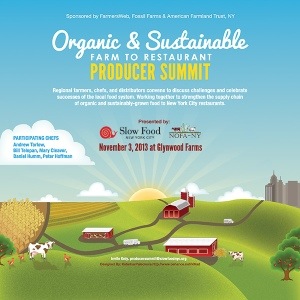
Farm to Restaurant Producer Summit: 11/3

A powerful summit is planned for November 3rd at Glynwood Farms in Cold Spring, New York.

Slow Food and NOFA are bringing together forward thinking chefs and farmers to celebrate the successes and discuss challenges of the regional food system. The day will culminate in the creation of an actionable strategy to strengthen and expand the supply chain of organic and sustainably-grown food to New York City restaurants.

The event is by invite only; click here for tickets.

20131014-083259.jpg

20131014-083158.jpg